Households and Organisations are complex structures within infoodle. Infoodle uses algorithms to calculate how a Household/Organisation is constructed, to simplify tasks such as sending messages or generating reports. The process relies on - and is encouraging - good quality data. The more accurate your data, the better households are organised.
There are 3 key fields used to determine whether the person is a parent or adult.
- A relationship is determined by the Marital Status field. You can name the status' as you wish but the key identifer infoodle is looking for is whether it is allowed to be 'can combine'. This forms a couple. A couple is assumed to be an adult.
- Guardian. This setting identifies that the person is the guardian of children (they don't have to be in the same household). This therefore states that they are a guardian.
- Date of Birth. For those who are 18 or over, they are classed as an adult. Note that if you choose to hide the year, infoodle will assume this person is an adult.
infoodle will categorise a list of people into their households/organisations.
- For each household/organisation, if a person is male and in a 'can combine' relationship, they are classed as a parent.
- If the person is a female and in a 'can combine' relationship, they are classed as a parent. When combining names, if their surname is different to the male's, it is kept. Otherwise, their name is added to the first male parent.
- If there is a person in the household/organisation who is marked as a guardian, they are assumed to be a parent.
- If there are no people in the household/organisation over 18, any messages will be addressed to children under 18. In the case of siblings, their names would be combined in order to ensure one letter is sent per household.
- If there is no age identified, then they aren't classed as either adults or children. They will be shown under the Unknown heading in the household view. However, for name combining on messages and receipts, unknown-aged people are included alongside adults (e.g. "John & Jane Smith"), so letters are still addressed correctly.
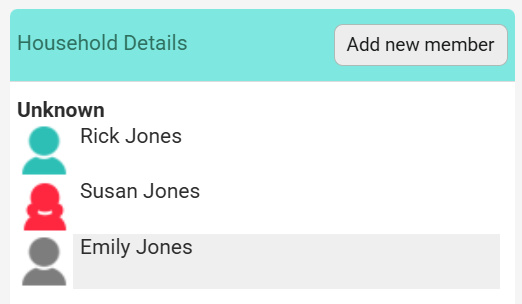
When calculating combined names - infoodle tries to identify the adults in the household/organisation using the above rules. If parents are specifically identified (i.e. guardian or marital status) then these are collated to form a combined name. For example if there are 5 people in the household and 1 person is identified as a parent, only 1 persons name will be combined.
Where nobody in the household/organisation is a parent
Name combining on messages and receipts includes unknown-aged people alongside adults, so letters are still addressed correctly. Where somebody IS identified - as a guardian or a can-combine marital status - only those people are used, and unknown-aged people are not added to fill the second place. This is what stops a child's initial appearing next to a parent's.
Receipts and Donor Statements
These are a special case. They do not use the household - they use the people who share the Giving Number on the transaction, and then apply the same parent/adult rules to that group. So a person can be in the household and still not appear on the receipt, if they are on a different Giving Number. To change who is named on a receipt, change the Giving Number (Finance > Giving numbers), not the household.
Only siblings in a household
If there are no people in the household/organisation with a date of birth and over 18, messages are addressed to the children under 18. Where their dates of birth are recorded, the eldest sibling's name is used. Where no dates of birth are recorded, infoodle cannot tell who is a child or the order, so it combines the first two names based on the order they were added to infoodle. Either way the household receives one letter.
Custom fields can be used to set Relationships. See Custom fields for more information.