Campaigns are used to collate transactions together and can be for any purpose e.g. an appeal or a project you're raising funds for. Basically you can tag a transaction to a campaign category (in addition to tagging it to an account code etc.) so that you can run a report to see how much money was received against a particular campaign. You can also generate receipts for people who have given to a particular campaign by filtering the receipt screen.
A campaign carries two names. The Name is the one your team works with, on the Campaigns screen and in campaign reports.
Before you start
Role Permissions
- Manage finance configurations, to add or edit a campaign
- Manage, Read and report on transactions, or Read and Report on Transactions, to open the Campaigns screen
For what each of the finance role permissions covers, see Finance Permissions.
How to set up a campaign
- Click Finance on the navigation menu.
- Click Campaigns.
- Click Add.
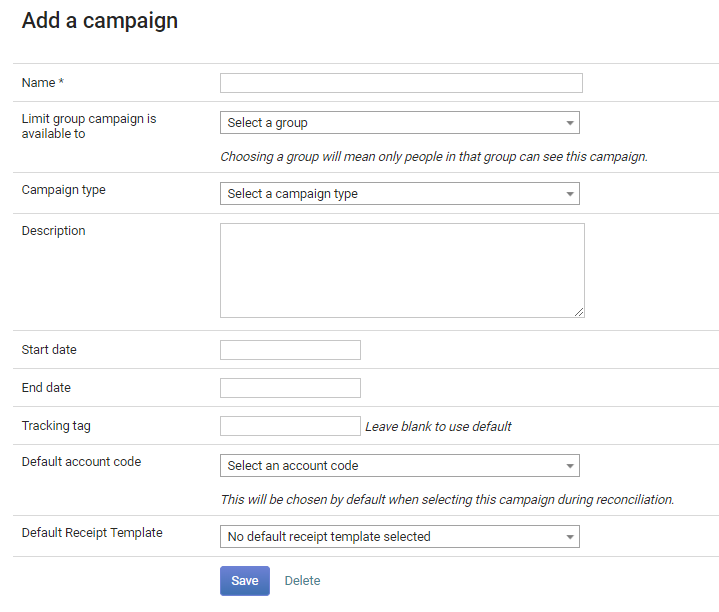
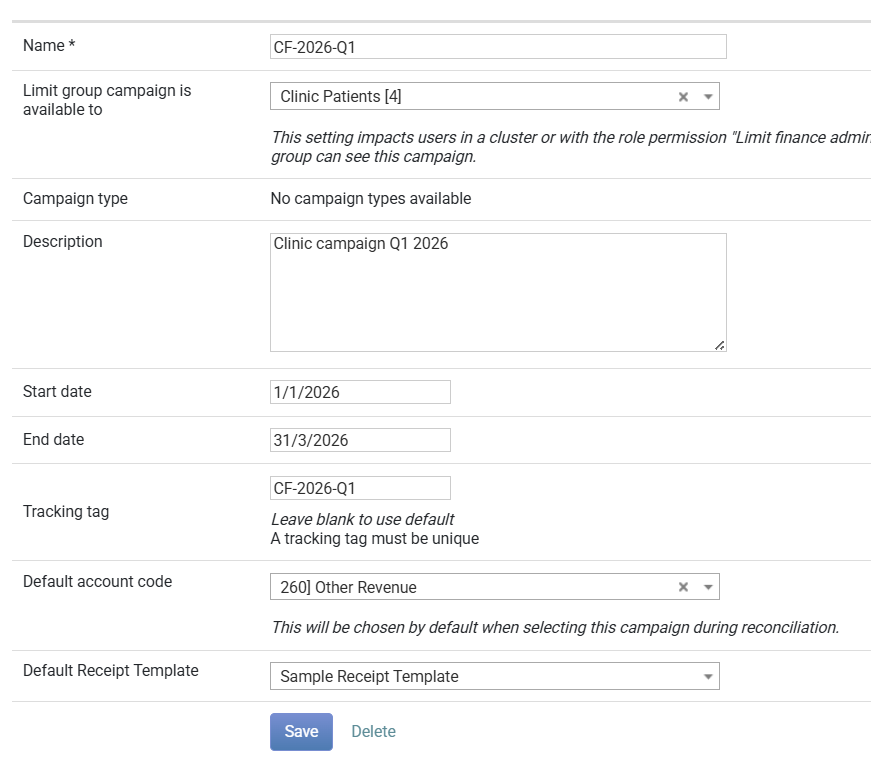
- Enter a Name. This is the internal name, and it is what you and your team see on the Campaigns screen and in campaign reports. Each campaign needs its own, so pick one no other campaign is using.
- Choose the Group in the Limit group campaign is available to drop down list if you want to limit this campaign to a specific group. This is optional and is not required. The limit takes effect for people working in a cluster and for people whose role has Limit finance admin to just users own groups set: those people see and edit only the campaigns available to their own groups.
Note: The groups shown here are those with 'Tasks' ticked in the group setup. To check/change this go into the group and edit it.
- Select a Campaign type. This gives you the ability to group campaigns by campaign type in the campaigns area. This will enable you to visually see your campaigns grouped together.
See how to add a campaign type if you don't have any set up. - Enter a Description if necessary.
- A Start Date and End Date can be added (one, either or both dates as required). These can help when producing reports.
- Enter a Tracking tag or leave it blank to use the default. Again, optional - this is optionally used when generating emails or labels for instance. A tag belongs to one campaign only, and infoodle shows This tag is used by another campaign as soon as you enter one that is already taken.
- Select a Default account code if required.
- Select a Default Receipt Template if needed.
Common questions
infoodle says the campaign already exists
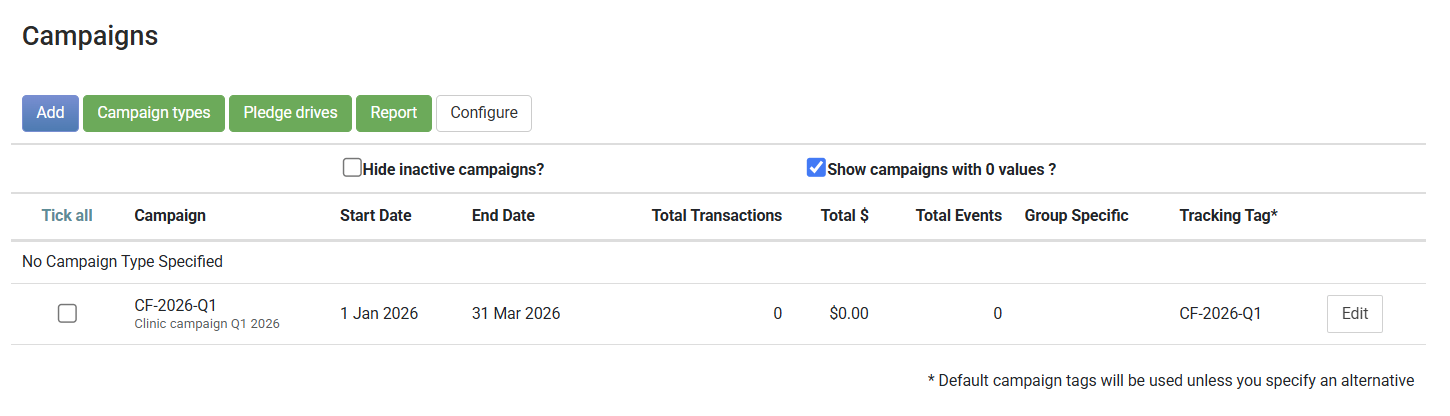
Two campaigns cannot share a Name. Adding one whose name is taken gives This campaign name already exists, and editing one gives This campaign already exists. The campaign you have run into is not always on screen: the Campaigns screen leaves out inactive campaigns while Hide inactive campaigns? is ticked, and leaves out campaigns with nothing recorded against them while Show campaigns with 0 values ? is unticked. Untick the first and tick the second to see every campaign, then pick a name that is free. Campaigns limited to different groups are counted separately, so one name can be used once per group.
What does a donor statement show?
See Donor Statement Personalisations and Income Statement Personalisations for the tags that put a campaign name on a statement.
Next steps
Once a campaign exists you can tag transactions to it and report on what came in. See Campaign Report.
Related articles: