Where to close batches
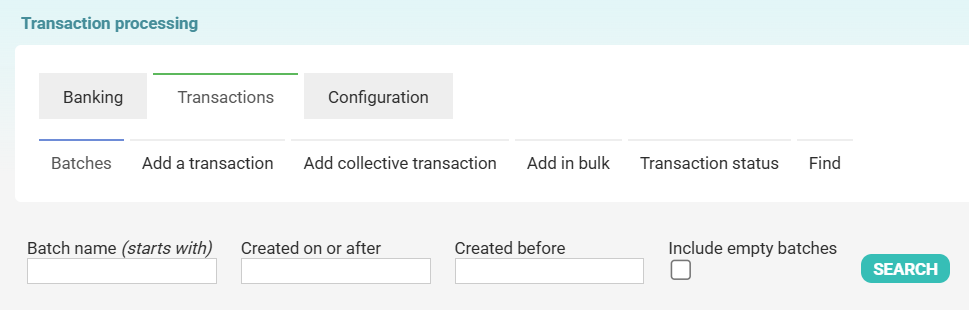
- Click Finance in the left navigation menu.
- Click Transaction Processing.
- Click the Batches tab.
- Use the search filters to find your batch, then click Search. Leaving the fields blank returns all batches.
Closing a batch
When you're finished entering transactions, you can lock the batch to prevent further changes.
- In the Choose a function dropdown, select Close.
- A confirmation dialog will appear: "Closing the batch will lock it from further editing. Only an administrator may unlock it."
- Click Confirm to close, or Cancel to leave it open.
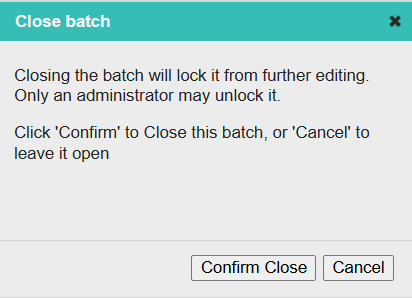
Once closed, a batch cannot have new transactions added to it until it is re-opened.
Re-opening a closed batch
If you need to make changes to a closed batch, you must re-open it first.
- Find the closed batch in the list.
- Click Choose a function and select Re-open.
- A confirmation dialog will appear, noting that re-opening will change the batch status from Closed back to Open, and from Banked back to Not Banked.
- Click Reopen to confirm.
Important: Re-opening a batch also resets its banked status. Remember to re-check any reports and balances after making changes, and close the batch again when finished.
Deleting a batch
Batch deletion permanently removes all transactions in the batch — including any reconciled and receipted transaction data. For this reason, batch deletion is only available to the infoodle Support team.
If you need a batch deleted, contact infoodle Support with the batch code(s) you need removed.
Note: Deleting a batch does not reset the corresponding Xero import state. If you imported data incorrectly from Xero, contact Support to discuss the best remediation path before proceeding.