When you send a bulk email in infoodle, the recipient list on the email compose screen shows you exactly which contacts will receive it, and quietly leaves out the ones that should not. infoodle builds this list from the people, groups, filtered groups and saved reports you add, then applies a set of rules that decide who is in and who is out. Reading the list before you send shows you everyone who is eligible at this point, so you can check who is included before the email goes out.
Before you start
Role Permissions
- Contact people by email: lets you open the email compose screen and build a recipient list.
- Run reports: only needed when you build your list from a saved report.
You will only ever see contacts you already have permission to view. People outside your access do not appear in the recipient list.
See Contact Permissions for what each of these role permissions means and how an administrator turns them on under Settings, Roles.
Opening the recipient list
- Open the Contact area from the main menu on the left, then click New email.
- Under Include the following, choose how to find your people: an individual, a group, a filtered group, or a saved report. Add as many sources as you need.
- Turn on the Recipient List toggle to open the Details of people selected table.
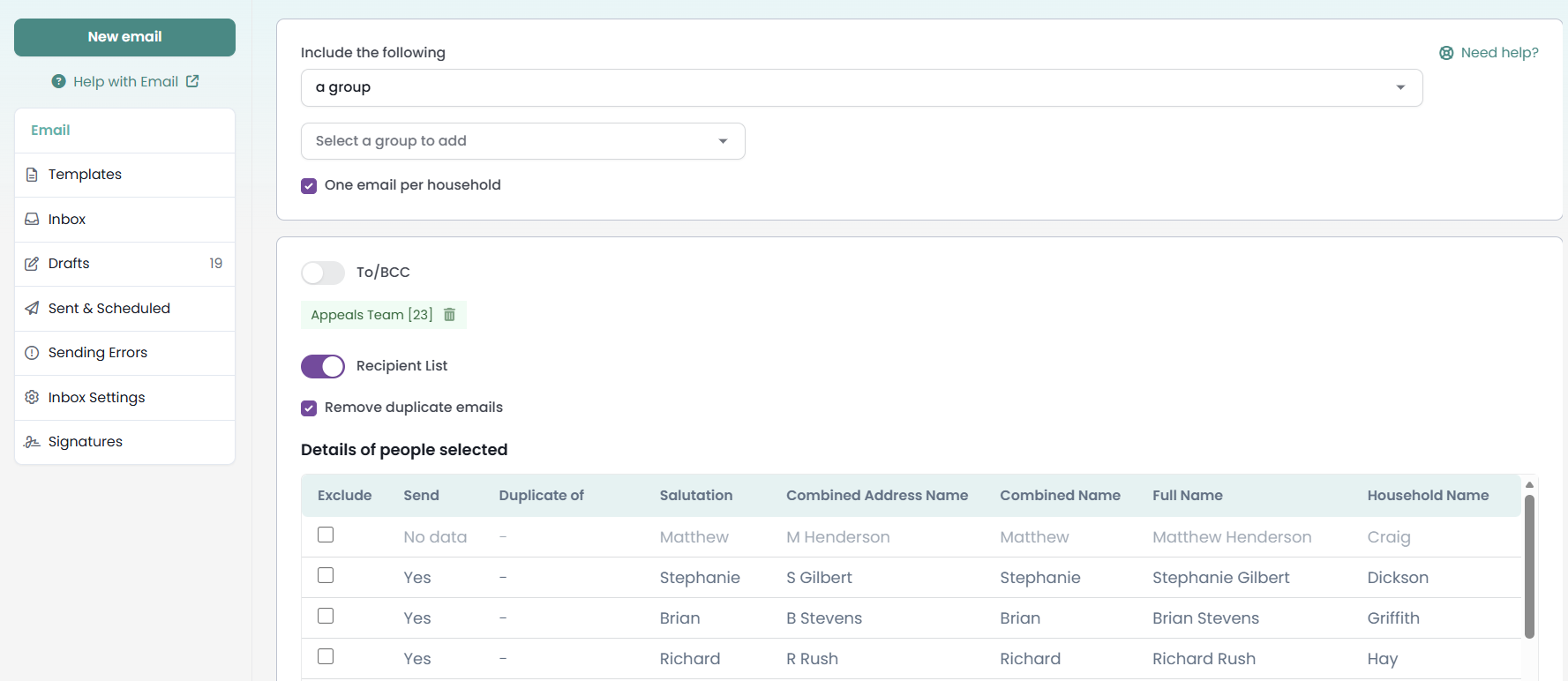
Each row in the table describes one contact:
- Exclude: tick this to drop the contact from this send.
- Send: shows Yes for a contact who will receive the email, or Duplicate when their address has already been counted.
- Duplicate of: names the earlier contact whose address matched, when the row is a duplicate.
- Salutation, Full Name, Household Name: identify the contact so you can check the list at a glance.
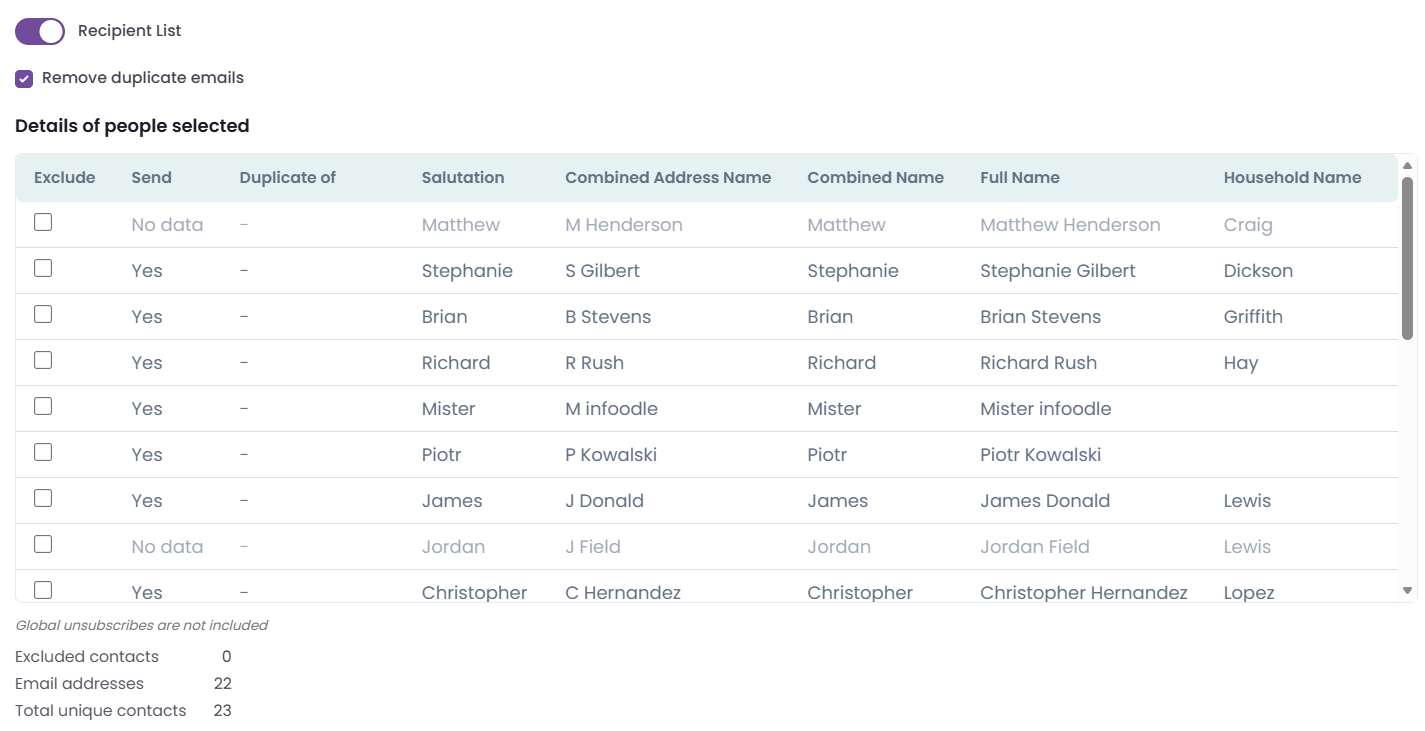
Below the table infoodle shows a running summary: Excluded contacts, Email addresses (the number of unique addresses that will be emailed), and Total unique contacts.
Why a contact is or is not included
infoodle applies these rules when it builds the list. Each one is a reason a contact may be left out or merged with someone else. The same rules apply whether your source is an individual, a group, a filtered group or a saved report.
- No active email address: infoodle only sends to email addresses marked Active on a contact's profile. A contact with no email address, or whose only address is set to inactive, is left out of the send.
- Globally unsubscribed: a contact who has unsubscribed from all of your emails is suppressed. The recipient list shows the note "Global unsubscribes are not included", and these contacts never appear in the table.
- Manually excluded: tick the Exclude checkbox next to a row to remove that contact from this send. They move into the Excluded contacts count and stay in the group for next time.
- Duplicate email address: when Remove duplicate emails is on, which is the default, a contact whose address already appears earlier in the list is marked Duplicate and emailed only once. The Duplicate of column shows who they matched.
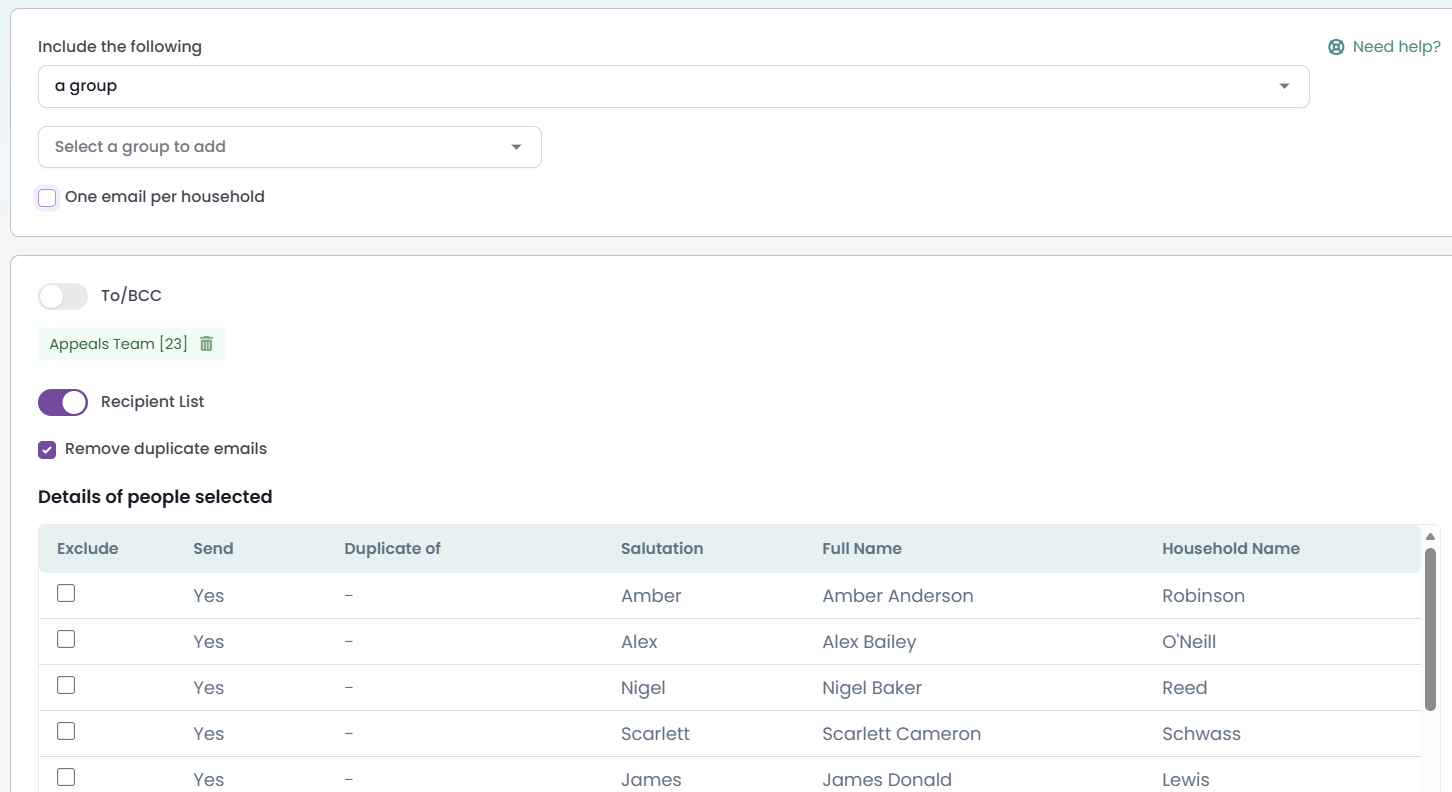
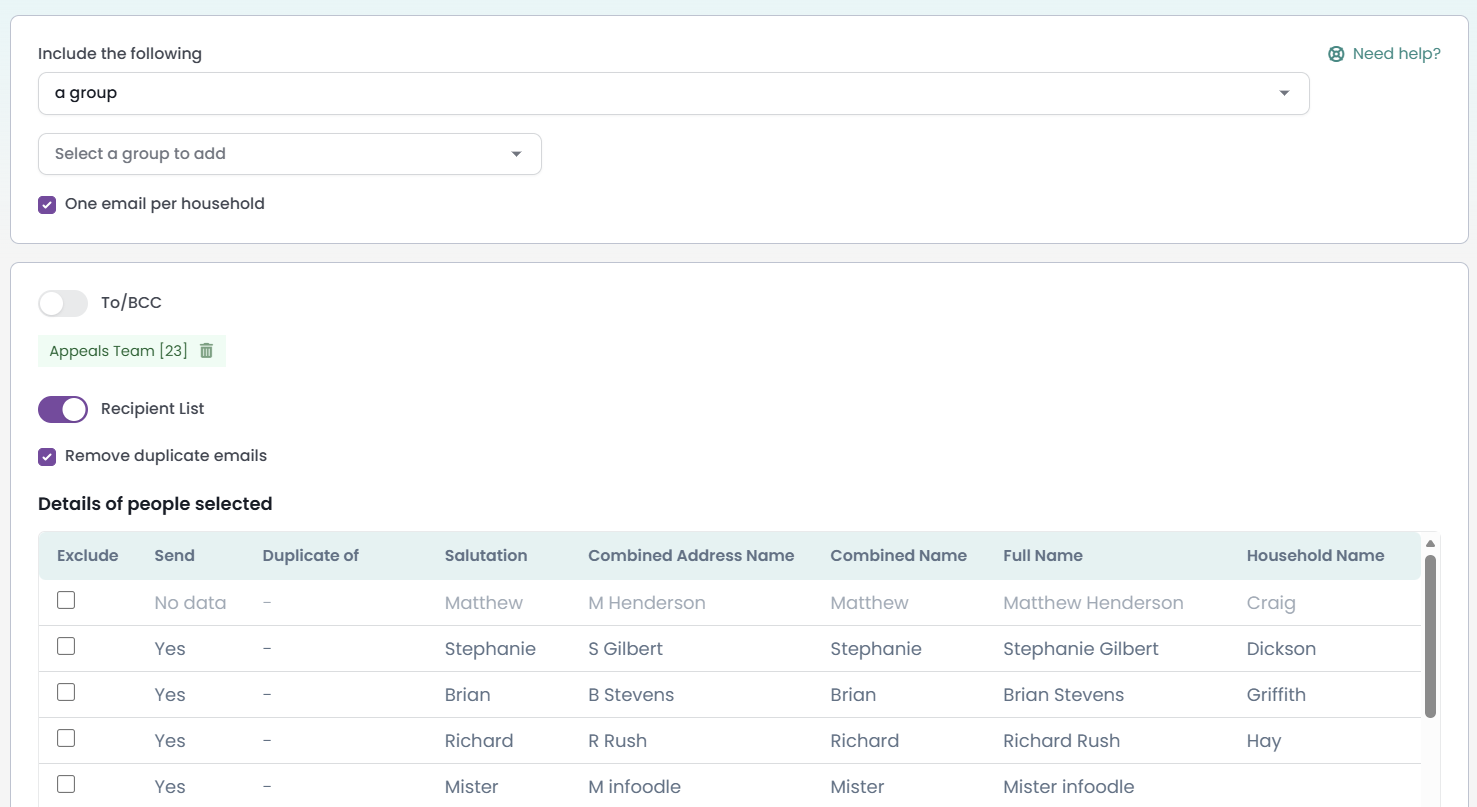
- Merged to one per household: with One email per household turned on, infoodle sends a single email to each household or organisation rather than to every member, so the other members drop out of the list.
- Past or expired group membership: when your source is a group, only current members are pulled in. People who have left the group, and groups whose expiry date has passed, are not included.
One email per household off
One email per household on
You set whether an email address is Active, and whether it is Private, on the contact's profile, in the contact details where their email address is listed.
Marking an email address Private does not remove a contact from an email send. Private only hides the address from the online directory and from exports that respect visibility. An active Private address still receives bulk email.
The recipient list applies your global unsubscribe list at this stage. Two further checks run only when you actually send: contacts who have unsubscribed from this particular type of email, and contacts who have paused their emails over a date range that covers your send, are held back at that point. This means the number of people who receive the email can be a little lower than the count shown here. The list is the set of eligible recipients, not a final delivery guarantee.
Common questions
Why is my recipient count lower than the number of people in my group?
The count reflects the rules above. Contacts with no active email address, contacts who have globally unsubscribed, and duplicate addresses are all left out, and One email per household merges household members into one recipient.
Can fewer people receive the email than the recipient list shows?
Yes. The list shows everyone eligible at this stage, with your global unsubscribe list already applied. When you send, infoodle also holds back contacts who have unsubscribed from this type of email and contacts who have paused their emails over your send dates, so the final number delivered can be slightly lower than the count on the list.
What does the "Duplicate of" column mean?
Two or more contacts share the same email address. infoodle emails that address once and marks the later rows as a duplicate of the first, so nobody receives two copies.
A contact bounced last time. Will they still get emails?
An address that keeps failing is added automatically to the sending system's suppression list, which holds back further emails to that address to protect your sending reputation. This suppression is separate from the contact's profile, so correcting or re-activating the address on the profile does not release it from the suppression list. An administrator can also choose to mark a failing address inactive from the failed emails screen; an address turned off that way then needs to be re-activated on the profile before it will send again.
How do I send just one email to each family or organisation?
Turn on One email per household before you send. See One Email Per Household/Organisation.
Next steps
Once the recipient list looks right, write and send your email. To adjust who is on the list, add or remove sources under Include the following, or use the Exclude checkboxes. To check who has unsubscribed or paused their emails, see Unsubscribe and Email Preferences. See Selecting Email Recipients to add people, groups and reports.